
Remembering Remarkable Women of WWII - July
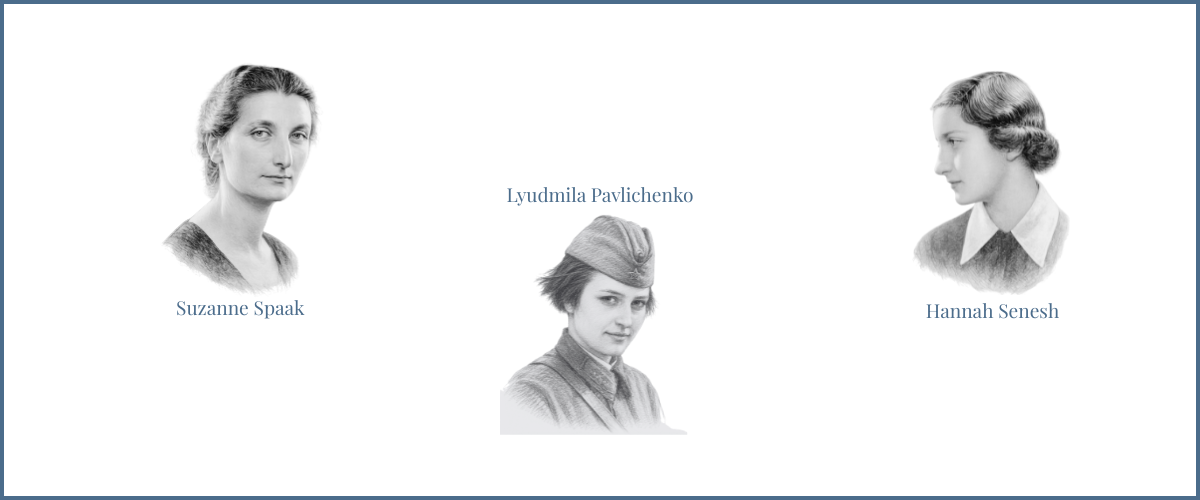
Each month, this series brings together a small selection of remarkable women from the Second World War. The women remembered here acted in very different circumstances — through resistance, humanitarian work, or quiet defiance — yet each demonstrated extraordinary courage in the face of danger. This July collection reflects on four such lives and the choices they made under occupation and war. Their stories deserve to be remembered.
Suzanne Spaak (1905–1944)
On 6 July 1905, Suzanne Augustine Lorge was born in Brussels, Belgium.
Born into a wealthy Belgian banking family, she later settled in Paris with her husband, Claude Spaak, and their two children. Although her family's social position shielded them from many of the immediate hardships of the German occupation, Suzanne became increasingly disturbed by the persecution of Jewish families. The arrest of close Jewish friends prompted her to become actively involved in resistance work.
After convincing members of the Jewish underground that she could be trusted, Spaak used her freedom of movement as a non-Jewish woman to support rescue operations throughout occupied Paris. She raised funds, gathered supplies, recruited trusted helpers, and organised safe places for those at risk of deportation. In early 1943, she played a leading role in the rescue of Jewish children from UGIF (Union générale des israélites de France) children's homes in Paris, where many faced imminent deportation. Some children were hidden in her own home, while others were placed with carefully selected families and institutions. Through these efforts, more than sixty Jewish children were successfully rescued.
In October 1943, Spaak was arrested by the Gestapo and imprisoned at Fresnes Prison. On 12 August 1944, less than two weeks before the liberation of Paris, she was executed by German forces.
In 1985, Yad Vashem recognised her as Righteous Among the Nations for her role in saving Jewish lives.
Suzanne Spaak's actions demonstrate how personal conviction and determined organisation could become powerful forms of resistance against persecution.
Lyudmila Pavlichenko (1916–1974)
On 12 July 1916, Lyudmila Pavlichenko (née Belova) was born in Bila Tserkva, in present-day Ukraine.
As a teenager she moved with her family to Kyiv, where she developed a keen interest in marksmanship through a local shooting club. Lyudmila was studying history at Kyiv University when Germany invaded the Soviet Union in June 1941. Determined to serve in combat, Pavlichenko volunteered for the Red Army and refused suggestions that she become a nurse, insisting on serving as a sniper.
Initially assigned to non-combat duties, she was eventually given the opportunity to demonstrate her shooting ability and joined the 25th Rifle Division as a sniper. She fought during the sieges of Odessa and Sevastopol, earning a reputation for exceptional skill and composure. By the time she was wounded and withdrawn from combat in 1942, she had been credited with 309 confirmed kills, making her one of the most successful military snipers in history.
Later that year, she travelled to the United States and Canada as part of a Soviet delegation seeking greater Allied support for the Eastern Front. During the visit, she met President Franklin D. Roosevelt and First Lady Eleanor Roosevelt. Much of the press attention throughout the tour focused on her gender and appearance rather than her military achievements
Unable to return to active combat after her injury, Pavlichenko spent the remainder of the war training Soviet snipers. After the war, she completed her university studies, worked as a historian, and remained active in veterans' organisations.
Lyudmila Pavlichenko's military service challenged contemporary expectations of women in combat and established her as one of the most accomplished snipers of the Second World War.
Hannah Senesh (1921–1944)
On 17 July 1921, Hannah Senesh was born in Budapest, Hungary.
She was raised in a cultured Jewish family, where literature and public life were an important part of daily life. Her father, Béla Szenes, was a respected journalist and playwright, but died when Hannah was still a child. As antisemitism intensified in Hungary during the 1930s, she became involved in a Zionist youth movement and, in 1939, emigrated to Palestine, then under British administration. There, she studied agriculture and later joined Kibbutz Sdot Yam.
During the Second World War, Senesh volunteered for a secret Allied mission and became one of a small group of Jewish volunteers from Palestine selected for parachute training. In 1944, she was parachuted into Yugoslavia before attempting to cross into Hungary to assist Allied operations and support efforts to rescue Jews facing persecution.
Hannah was arrested shortly after crossing the border and imprisoned. Despite repeated interrogation and torture, she refused to reveal information about her mission or her fellow operatives.
On 7 November 1944, at the age of twenty-three, Hannah Senesh was executed by firing squad in Budapest. Alongside her wartime service, she left behind poems, letters, and diary entries that continue to be widely read and studied for their insight into her experiences and convictions.
Hannah Senesh's life reflects the courage of those who willingly returned to occupied Europe in an effort to aid others despite overwhelming personal risk.